
NID Object Transformation Exercises: Creative Thinking with Everyday Objects
Why Object Transformation Matters
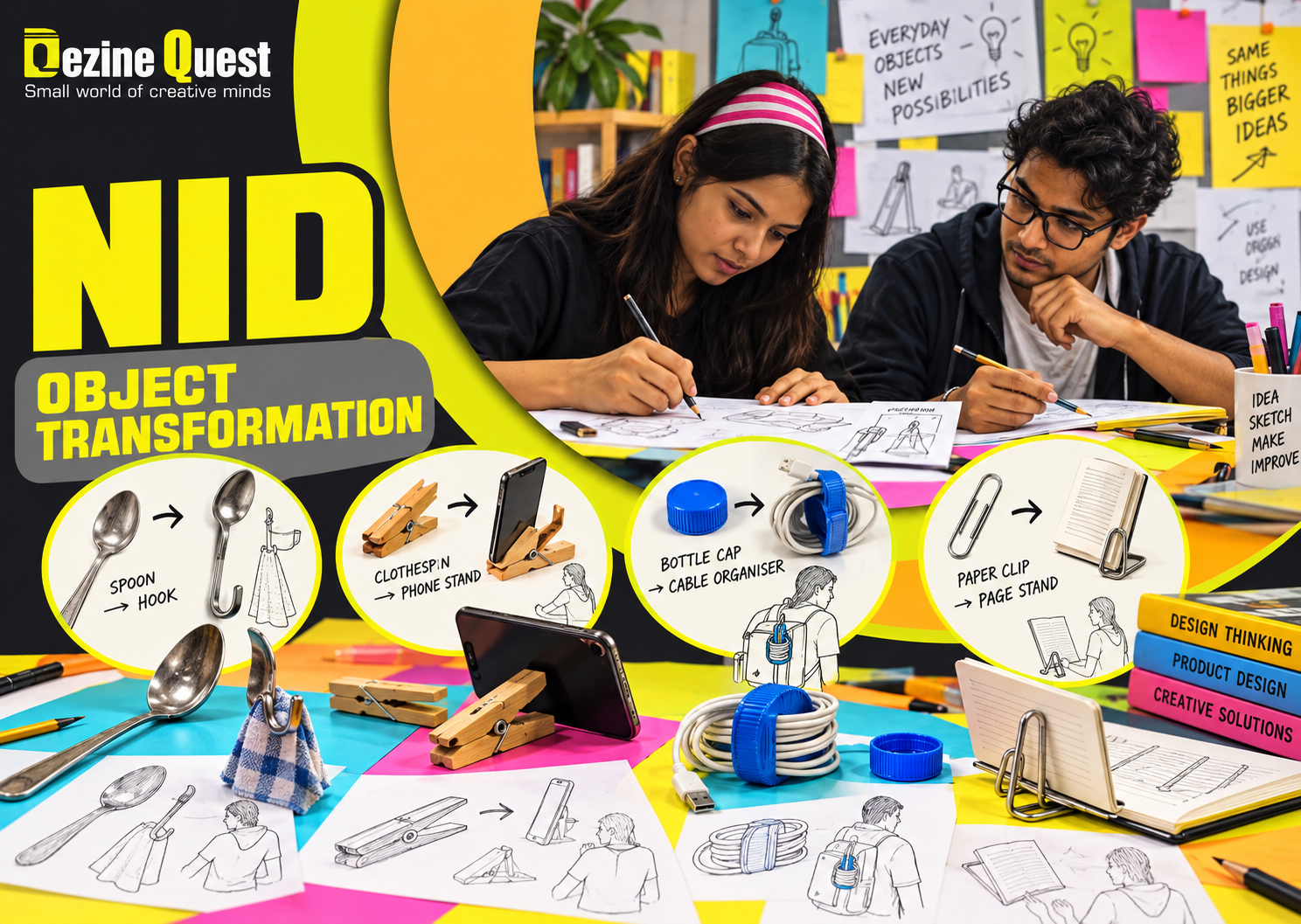
A paper clip is normally used to hold sheets together. Its spring-like shape, however, might inspire a cable organiser or a small page stand. Reimagining familiar objects builds observation and flexible thinking. This is a useful NID creative aptitude exercise, not a prediction of a specific examination question.
Observe Before You Invent
Select a spoon, clothespin or empty carton. Note its material, dimensions, movement, grip and limitations. Then list problems its existing features could solve. Start with physical evidence: a thin clip may hold paper but not a heavy book. Strong concepts grow from accurate observations.
Exercise One: Ten Ideas in Ten Minutes
Draw an ordinary bottle cap in the centre of a sheet. Generate ten alternative functions around it. Do not reject unusual ideas immediately. Afterwards, select three based on usefulness, feasibility and clarity. Explain the intended user for each. This separates free ideation from reasoned selection.
Exercise Two: Change One Feature
Choose the best concept and change just one feature: add a hinge, widen a handle or alter a surface. Sketch the original and revised object side by side. Explain how the change affects function. A transformation should be understandable without a lengthy paragraph.
Exercise Three: Add a Real User
Imagine a student carrying art materials on a crowded bus. Can your chosen object help organise, protect or carry something? Show the person interacting with it in two small drawings. Check stability, comfort and safety. A creative idea is stronger when it responds to a real situation.
Exercise Four: Introduce a Constraint
Redesign the concept using only recyclable cardboard, or require one-handed use. Constraints force decisions and reveal hidden weaknesses. Do not assume a material is sustainable merely because it is recycled; focus on the practical suitability of the chosen material.
Present the Solution Clearly
Arrange a page into the original object, the observed problem, the modified idea and its use. Use one large sketch supported by two smaller views. Label the mechanism, not every visible feature. Ask someone unfamiliar with the project to describe what they think happens.
Five-Day Practice Routine
Day one: analyse five objects. Day two: generate ideas for two. Day three: develop three sketches. Day four: test one against a user scenario. Day five: revise from feedback. Save the first drafts to show how your thinking changed.
Common Mistakes
Avoid decorating an object without changing its usefulness, copying popular internet concepts, and promising a mechanism will work without testing it. Judge ideas by purpose, usability and clarity rather than novelty alone.
Dezine Quest and NID Preparation
Dezine Quest lists NID classes in Patna with creative aptitude, visualization, sketching and guidance. Students considering NID DAT coaching can ask about current idea-generation exercises, faculty feedback and studio practice. Verify the latest examination structure directly with official sources.
FAQs
Is this guaranteed to appear in NID DAT? No; it is a transferable design exercise. Do I need advanced drawing skills? Clear sketches are more important than decorative rendering. How should I select an idea? Consider user need, feasibility and the clarity of the explanation.
Conclusion
Object transformation helps aspiring designers move from observation to purposeful imagination. Analyse an item, generate possibilities, test constraints and communicate the outcome. Explore Dezine Quest’s current NID entrance coaching for guided creative aptitude practice.
Explore courses: https://www.dezinequest.com/online-classes.html
Dezine Quest | 24, Commercial Floor, Krishna Apartment, Boring Road, Patna, Bihar 800013 | +91 7070708866