
Material Handling for Design Entrance Exams: How to Build Better 3D Models for NIFT & NID
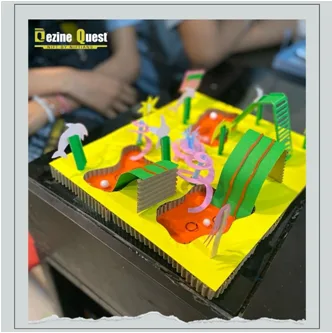
For many design aspirants, working in three dimensions feels very different from solving a drawing or aptitude question. A sheet of paper can be erased and redrawn, but a physical model requires planning, material awareness, structural thinking and controlled execution. That is why material handling should be practised as a design skill rather than treated as a last-minute craft activity.
Why Material Handling Matters in Practical Design Tests
Practical design assessments can require students to translate an idea into a physical form within limited time. Dezine Quest’s current NIFT Situation Test and NID DAT Mains preparation pages emphasise model making, material handling, ideation, execution, presentation and timed practice. These skills are connected: a creative concept is useful only when the student can select, join and shape materials effectively enough to communicate it.
1. Understand a Material Before Trying to Control It
Every material behaves differently. Paper folds and curves, cardboard provides stiffness, wire can create frames, thread can connect or suspend parts, and soft materials may help create volume or texture. Before building a complete model, spend time cutting, folding, bending, rolling, joining and layering individual materials. Small experiments reduce mistakes during timed work.
2. Start with the Structure, Not the Decoration
A visually attractive model can still fail if it cannot stand, balance or hold its intended form. Begin by identifying the main structural skeleton. Decide where the load sits, which parts need reinforcement and how components will connect. Decorative details should come after the basic form is stable.
3. Generate More Than One Idea
When a theme is given, avoid immediately constructing the first idea. Spend a few minutes creating small concept sketches. Compare the alternatives for originality, feasibility, material requirement and time. A simpler idea that can be executed cleanly may communicate better than an ambitious model left incomplete.
4. Learn Clean Joining Techniques
Messy joints can reduce the visual quality of an otherwise good model. Practise tabs, slots, folds, interlocking parts, wrapping and other simple joining methods. Use adhesive carefully and only where necessary. The objective is to make connections look intentional rather than repaired.
5. Use Material Properties as Part of the Concept
Instead of forcing every material to behave the same way, use its natural quality. Flexible material can suggest movement, transparent material can communicate openness, rough texture can create contrast, and rigid board can provide geometry and stability. When material choice supports the concept, the model becomes more convincing.
6. Practise Scale and Proportion
Before cutting major pieces, estimate the overall dimensions of the model. If one component becomes too large, other parts may look visually weak or the model may become unstable. Quick measurement and proportion planning help maintain balance and save material.
7. Think in 360 Degrees
A physical model can be viewed from several directions. Rotate your work while constructing it. Check the front, sides, back and top. Make sure important elements are not visible from only one viewpoint unless the concept specifically requires it.
8. Reserve Time for Finishing
Students sometimes use the entire session for construction and leave no time to clean edges, remove excess adhesive or improve presentation. Divide the available time into ideation, construction and finishing stages. A few final minutes dedicated to presentation can noticeably improve clarity.
A Practical Model-Making Practice Routine
- Exercise 1: Build the tallest stable structure using a limited set of materials.
- Exercise 2: Create a functional object from paper and cardboard without decorative elements.
- Exercise 3: Represent an emotion using only form, texture and balance.
- Exercise 4: Redesign a common product for a specific user and make a quick prototype.
- Exercise 5: Create a themed 3D composition under a strict time limit.
- Exercise 6: Rebuild the same concept using a different material combination.
How to Write About Your Model
When a practical test asks for a caption or explanation, keep the writing connected to the design. State the central concept, important features and how the model answers the theme. Avoid filling the description with unrelated decorative language. Clear writing should help the evaluator understand choices that may not be immediately visible.
Common Material-Handling Mistakes
Common problems include starting construction without a plan, using too much adhesive, creating weak joints, adding decoration before the structure is complete, ignoring the rear or side view, and attempting a model that cannot realistically be finished in time. Regular timed practice makes these weaknesses easier to identify.
How Dezine Quest Supports Practical Test Preparation
Dezine Quest’s website describes dedicated preparation for the NIFT Situation Test and NID DAT Mains. The listed training includes material handling, 3D modelling, technique exploration, mock tests, portfolio support, creativity and ideation practice, personalised checking, feedback and mentoring. This type of hands-on preparation can help students move from understanding a concept to executing it under test conditions.
Conclusion
Material handling improves through experimentation, not memorisation. Learn how materials behave, practise clean construction and make time management part of every exercise. The goal is not simply to create an attractive object; it is to communicate an idea through form, structure, material and presentation. With repeated practice, students can become faster and more confident when converting an idea into a physical design solution.
Frequently Asked Questions
What is material handling in design entrance preparation?
It refers to understanding, shaping, joining and using different materials effectively while developing physical models or practical design solutions.
How can I improve 3D model-making speed?
Practise common cutting, folding, joining and structural techniques separately, then combine them in timed model-making exercises.
Should I focus more on decoration or structure?
Build a stable and clearly communicated concept first. Finishing and decoration should support the idea rather than hide structural weaknesses.
Can material-handling practice help for both NIFT and NID?
Hands-on material exploration can support practical preparation for relevant later-stage assessments. Students should always confirm the current format and requirements from the latest official examination information.
Suggested Internal Links
- NIFT Situation Test page
- NID DAT Mains / Studio Test page
- NIFT Coaching page
- NID Coaching page
- Test Series page
- Portfolio Preparation section
- Contact / Enquiry page
Suggested CTA
Preparing for the practical stage of a design entrance exam? Explore Dezine Quest’s hands-on training for material handling, 3D model making, ideation, mock practice and presentation for NIFT Situation Test and NID DAT Mains preparation.
Publishing Note
This is an original website-aligned article created around Dezine Quest’s current practical-test preparation services. It is intentionally different from the previously prepared blogs on observation skills, visual memory, sketchbook habits, general NID preparation and online preparation. Verify current examination structure, weightage, dates and official requirements before publishing any time-sensitive exam details.